Flying Lessons, Vespa Edition:
Mars in Rohini, Daring in Disguise

Pinky, now twelve, in the very first summer without her ManguBa, her grandmother. By night, she searched the sky for her grandma’s star; by day, she learned how to fly on a Vespa.
Pinky’s tears fell for days and nights, each one a quiet prayer carried on the warm summer winds, for her Manguba. In the stillness of her room, she whispered into the darkness, begging ManguBa to come back... please... just this once, just for a moment.
“I’ll be good this time,” she promised, voice trembling. “I won’t give you any trouble, not even about Tinkoo. I’l say everything softly, just like you taught me: words flowing like gentle, beautiful flowers, never like rocks.”
She longed for Manguba’s arms, aching for that familiar warmth. She had heard stories that the departed sometimes returned, that ancestors transform into stars. So every summer night, she climbed to the terrace, searching the vast sky, as if something in her already wanted to lift, until she found the brightest one: Manguba’s star.
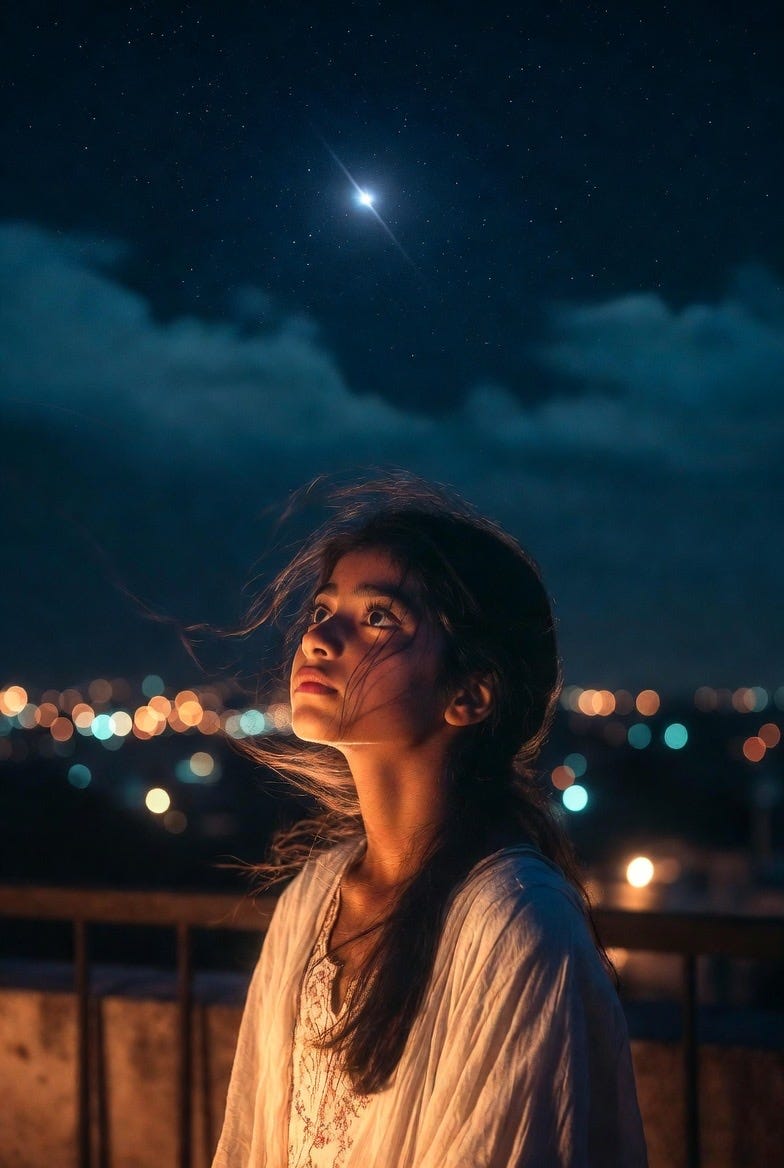
“Look how pretty you are,” Pinky whispered. “You have to come back! If not for anyone else, then for your darlings, Tinkoo and me, you must, you must.”
Though Manguba was gone from sight, in Pinky’s heart she remained alive—in whispered wishes, in every star-filled night, and in tears that fell like a silent hymn of love.
Pinky carried the ache like an invisible shawl, always draped, never heavy enough to fall off. Harsha saw it in the stillness of her once-chatty daughter, in the way her eyes lingered longer on Manguba’s saree cupboard, or the way she hummed half-remembered bhajans to herself. But Harsha, resilient and practical as ever, understood healing was not a one-size-fits-all prayer, it was a routine, a rhythm. No therapist, no dramatics. Just engagement and purpose.
So she filled Pinky’s days with morning chores and play-time, afternoon math worksheets, and evening kitchen duty, where Pinky was officially declared dinner chef for four. It wasn’t Manguba’s mastery, but it was earnest.
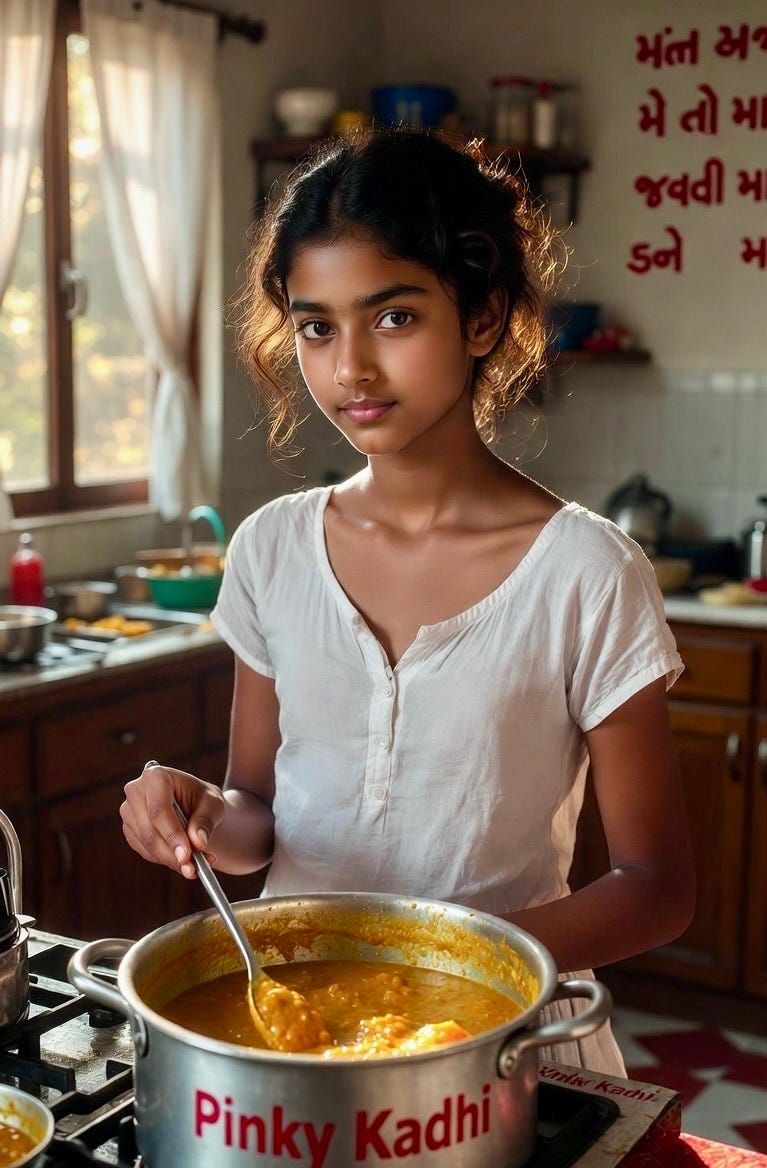
Hasu handled lunch, Pinky experimented with dinner, and by end of the summer, she’d developed her own “Pinky Kadhi.” In the quiet evenings, Pinky would journal old sayings, Gujarati proverbs, Hindi couplets, and little English phrases she liked.
They visited Kantimama, first time ever, who hosted a warm-hearted memorial, the least he could for Manguba. He noticed Pinky’s spark as she played with his grandson, and Tinkoo’s kindness and quiet thoughtfulness in every gesture. “You’ve raised them well, Harsha,” he said warmly. She returned his smile, thankful for the praise, but her eyes kept drifting back to Pinky. They were always watchful, quietly measuring the strength flickering within her daughter.
Her gaze lingered on Pinky a moment longer, as if silently acknowledging the fierce spirit beneath the sorrow.
That summer, Pinky didn’t just survive her grief. She began to stir against it. She didn’t just dream of flight, she very nearly tasted it, throttle and all. Officially banned from driving lessons by Harsha (who believed scooters + pre-teens = emergency), Pinky and Tinkoo found their loophole: dragging Vijay’s turned-off scooter to the barren open plot nearby. It took the strength of a bull and the stubbornness of one too. A deadweight two-wheeler is no joke, especially under the glare of a rising sun and a disapproving dad trailing behind with folded arms and passive instructions like, “Turn right, your right.”
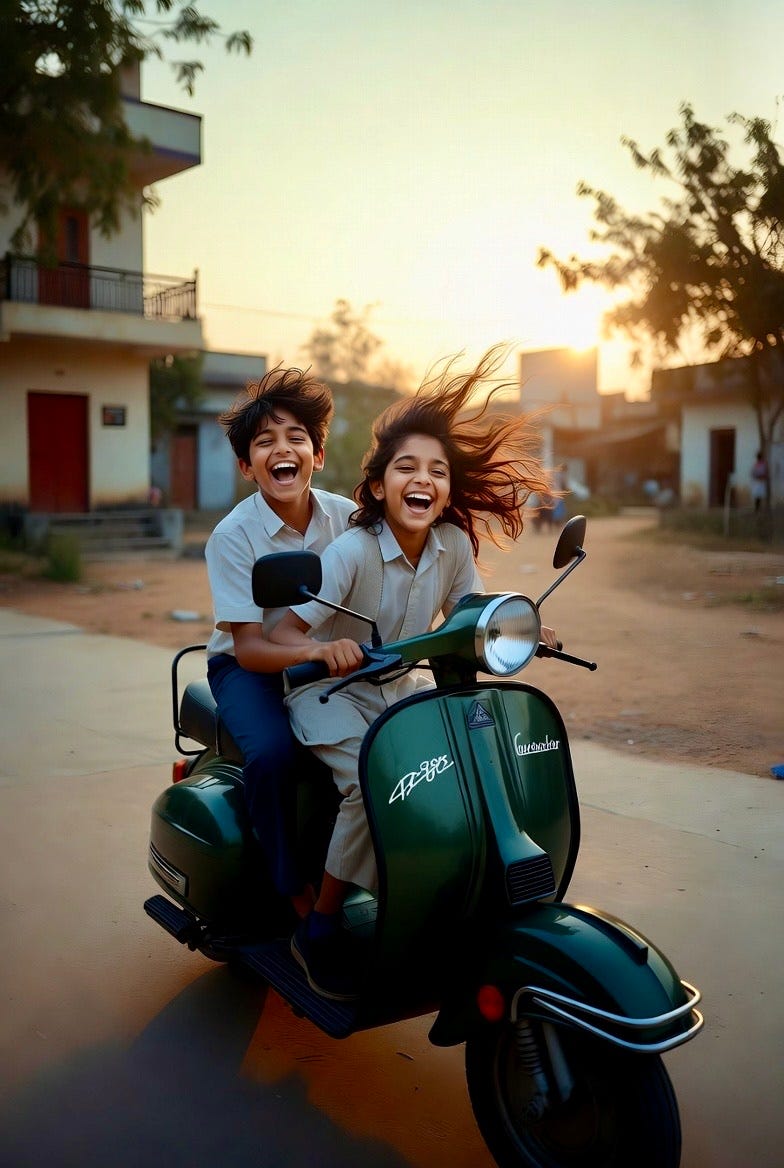
But Pinky’s true lessons came unsupervised. If Vijay was napping or Hari Uncle had forgotten his Vespa keys hanging there, it was game on. She would hop on, heart racing, dress belt tied around her waist, and take off like she was born to chase the wind.
In those breathless seconds, with the road blurring and her pulse roaring in her ears, it felt like more than speed. It felt like memory in motion.
A whisper that her grandmother’s strength now lived in her throttle.
One day, fate, or possibly a pile of municipal trash, launched her, quite literally, into scootered stardom. She flew over a heap of junk, Vespa and all, like a Bollywood stunt double without a paycheck. A full six feet airborne for nearly twenty, she landed wheels-down, stunned but gleeful, under the wide-eyed watch of the ironing man across the street, who immediately folded not just the shirt but the story for Harsha.

Another time, as a daring pre-teen, Pinky had commandeered the family’s heavy Bajaj scooter; masculine with its metal frame warm from the sun, the thick leather seat molded to years of rides; and ventured out onto the national highway without Harsha’s permission.
The wind tangled her hair, the hum of the engine filled her with reckless freedom, but the adventure soon took a wrong turn.
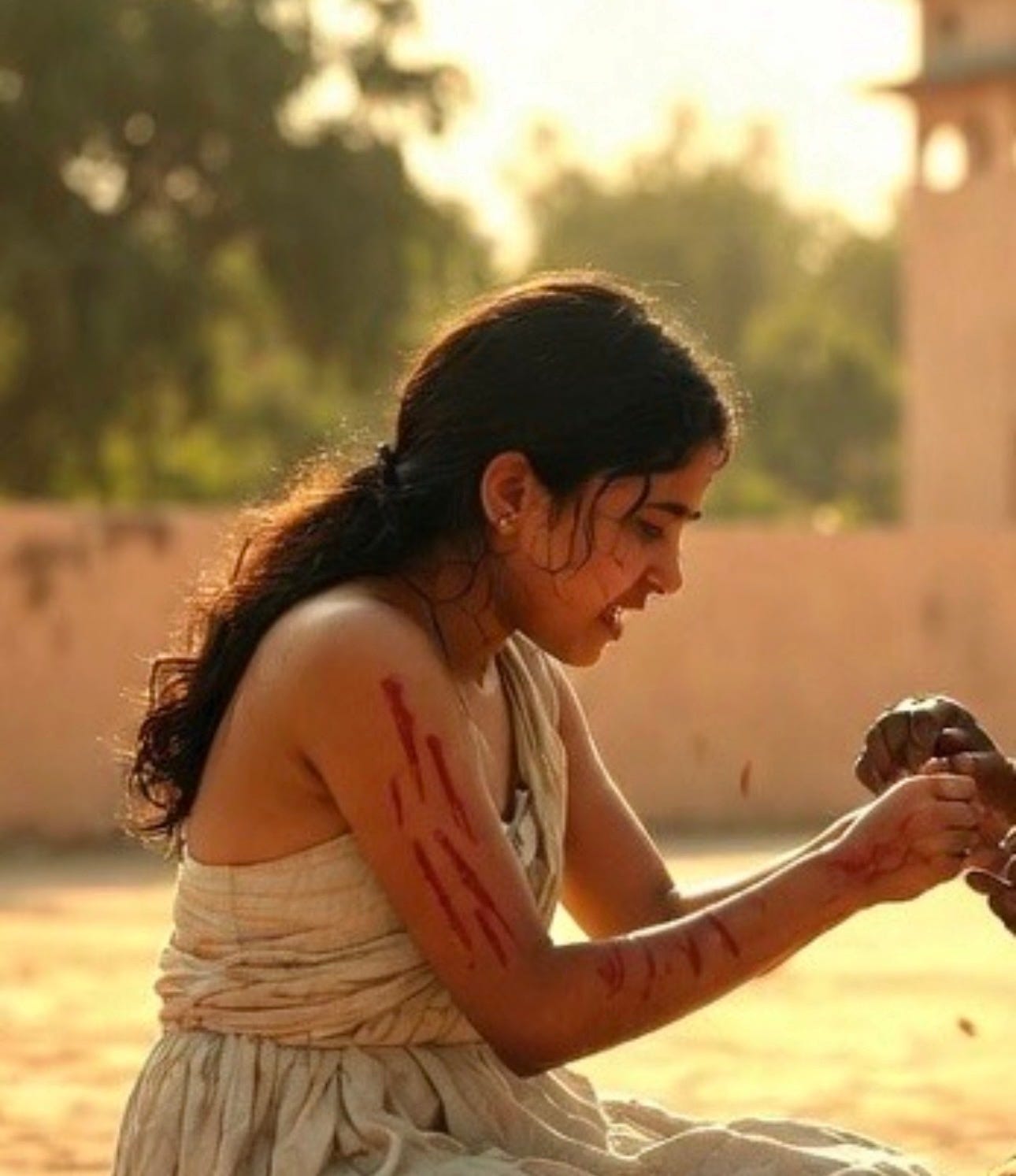
She veered too far off the national highway, into a roadside ditch lined by thick, tall babool bushes. Arms scratched by babool thorns, scooter stuck, and dignity barely intact, she was rescued by a passing-by, local gentleman who not only knew her but also knew Harsha. Pinky’s heroic return came with a side of tattling wrapped in concern.
“Just letting you know, Harshaben... she’s fearless, and so are those babool trees.”
Harsha, ever the composed but fiery force, didn’t yell. She simply tightened her grip on Pinky’s summer radius and said, “Next time you want to fly, Pinky, at least take your math homework with you.”
Because in their town, nothing stayed secret for long, and Pinky’s legends were always just one Vespa key away from ignition.
That evening, as the sun dipped low and painted their small courtyard golden, Harsha sat beside Pinky, gently wiping the scratches on her arms.
“Pinky,” she said softly, “life will always give you chances to fly, sometimes wild, sometimes careful. But remember, courage isn’t just in taking off, it’s also knowing when to land safely.”
Pinky looked up, a little sheepish but proud.
“Math and science taught you how to solve problems,” Harsha smiled, “but life will teach you how to handle the surprises. Both need patience, and both need love.”
Looking at Pinky’s scratches one evening, Harsha’s eyes were steady. “I don’t care if you scratch and bleed yourself, Pinky. What I care about is if you ever hurt someone else’s child driving on those streets. That would be a nightmare I could never forgive.”
Pinky nodded, feeling the fierce love in her mother’s warning, protecting not just her, but everyone around her.
And in that quiet moment, Pinky knew her fearless mother wasn’t just protecting her from the roads, but preparing her for every flight ahead.
Although that stern warning never turned Pinky from taking risks and driving the scooter, she continued to learning—and that too, fast.
Pinky didn’t know then that this restlessness had a name. That the fire she carried, obedient on the surface but feral underneath, was written long before scooters and stars. Long before Manguba left.
There are flames that burn quietly, beneath silk smiles, steady hands, and dutiful eyes. This fire is not always visible, but it’s there. Glowing under the surface. Controlled. Contained.
Mars in Rohini is this kind of fire. Passionate. Loyal. Fierce. Beautiful. And at times, unforgiving.
Pinky would learn, much later, that this fire was never meant to destroy her. It was meant to teach her how to move-when to accelerate, when to brake, and when to lift her eyes to the sky and remember who first taught her to be gentle.
Some lessons arrive as prayers. Others come roaring in on two wheels.
Mars in Rohini isn’t loud. It hums, waiting for the road.
Author’s note: This story is part of my Twelve Houses Ancestral book, containing tales where childhood, character, and the sky quietly conspire.
“fire… obedient on the surface but feral underneath”
That’s Pinky in one line.